Precision-Crafted Leather Goods & Harness Components Engineered for Durability, Flexibility, and High Tensile Performance


The global equestrian equipment market is experiencing a profound transformation driven by technological innovations in material science, stringent safety mandates, and changing supply chain economics. Within this sector, split leather horse gear has emerged as an essential segment, bridging the demand for high structural strength, cost efficiency, and aesthetic appeal. As a top China split leather horse gear supplier and exporter, our industrial footprint integrates state-of-the-art hide splitting techniques with advanced polymer surface coatings to deliver harness products, bridles, stirrup straps, and protective boots that withstand severe mechanical stress and extreme weather conditions.
Split leather, derived from the lower fibrous layers of cattle hide after the top-grain split, offers distinct physical advantages when processed with modern polyurethane (PU) or micro-coating finishes. In contrast to traditional top-grain leather which commands high cost and requires intensive maintenance, high-grade split leather provides exceptional dimensional stability, uniform thickness across large panels, and optimal resistance to moisture and equine sweat salts. Global procurement directors for equestrian brands in Europe, North America, and Australia are increasingly leveraging Chinese manufacturing hubs to secure certified split leather equipment engineered to rigorous ISO and DIN standards.
Key Strategic Advantage: Modern split leather processing utilizes AI-guided splitting splitting machinery that guarantees uniform thickness tolerances within ±0.05mm, making split leather horse gear the ideal choice for high-volume commercial production of horse tack, halters, and protective gear without sacrificing mechanical integrity.
Over the past two decades, China's leather processing industry has undergone a technological revolution. Moving beyond basic tanning methods, top exporters now deploy closed-loop eco-tanning systems, automated hide splitting lines, and computerized tensile strength testing. This technical maturity allows manufacturers to offer customized split leather with tailormade characteristics—such as varied flex endurance, specific oil fatliquoring ratios for flexibility in cold climates, and custom surface embossing (from smooth aniline looks to deep pebbled textures).
To make informed procurement decisions, global sourcing managers must evaluate the physical properties of split leather against alternative material options. Equine equipment is subjected to dynamic cyclic loading, high friction, UV radiation, and continuous exposure to biological sweat containing urea and sodium chloride. Below is an engineering benchmark comparing raw material choices utilized in modern horse gear manufacturing:
| Performance Metric | Coated Split Leather (Engineered) | Full-Grain Bovine Leather | Standard Synthetic PU/PVC |
|---|---|---|---|
| Tensile Strength (ISO 3376) | High (25 - 35 N/mm²) | Very High (30 - 45 N/mm²) | Moderate (12 - 20 N/mm²) |
| Tear Resistance (ISO 3377-2) | > 80 N/mm | > 100 N/mm | > 45 N/mm |
| Thickness Uniformity | Ultra-High (±0.05 mm) | Variable (±0.25 mm) | Absolute (±0.01 mm) |
| Equine Sweat & UV Resistance | Superior (Polymer Sealed) | Requires Continuous Care | Degrades under harsh UV |
| B2B Cost Efficiency Index | Optimal / High ROI | Premium Cost Structure | Low Cost / Lower Lifespan |
When engineering split leather for saddlery, girth straps, and reins, our technical facility applies multi-stage surface sealing and deep-fiber fatliquoring. The process ensures that:
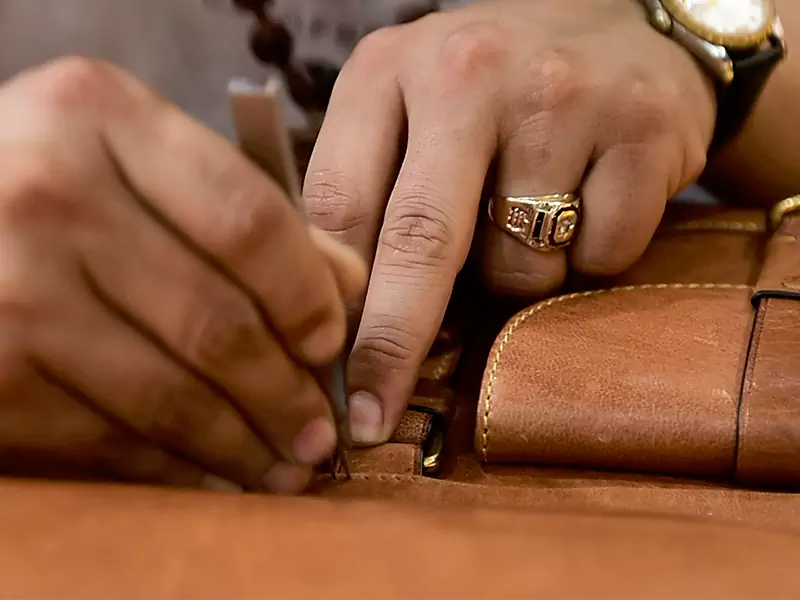
Our company specializes in manufacturing various types of handbags, laptop bags, casual bags, crossbody bags and wallets, and has multiple production lines. There is a professional quality inspection department and a design team. The products are sold both at home and abroad. During its long-term development, the company has established long-term and good cooperative partnerships with many large domestic companies by virtue of its excellent product quality advantages. We sincerely welcome domestic and foreign customers to visit our company for inspection and technical exchanges. We are willing to join hands with friends from all walks of life to create a beautiful homeland together!
Proven Quality Assurance Framework, Rigorous Testing Protocols, and Customer-Centric OEM Services
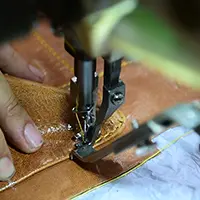
Accumulate data for constant repetition and stability across all batch processing and manufacturing cycles.
Meet the rigorous chemical and mechanical safety standards required by the European Union (REACH) and the United States (CPSIA/Prop 65).
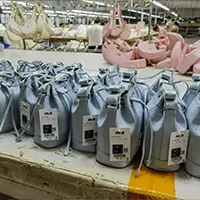
Emphasize effective communication before sales, full follow-up during production, and structured summary of after-sales use.
Solving Complex Sourcing Pain Points for International Distributors, Retailers, and Equine Gear OEMs
International buyers frequently suffer from variance in hide thickness and color tone between production batches. We resolve this by using automated spectrophotometers and digital hide thickness scanners to lock in exact specifications.
Customs detentions due to excessive Chromium VI or banned AZO dyes can ruin supply chains. Our products undergo rigorous lab verification ensuring zero harmful chemical residues and full REACH compliance.
Buckles, snaps, and D-rings are stress-tested for load points up to 500kg. We utilize corrosion-resistant stainless steel, solid brass, and nickel-plated alloy hardware engineered specifically for heavy equine use.
From initial CAD design blueprints to physical prototypes within 7 working days, our in-house R&D department translates client specifications into market-ready split leather equine gear efficiently.
Delivering high-performance equestrian gear demands strict quality control at every phase of production. Below is an engineering overview of our proprietary split leather manufacturing process:
Raw bovine hides undergo rigorous initial grading to eliminate structural defects, scars, or uneven collagen fiber distribution. Utilizing high-speed band-knife splitting machines, the lower hide layer is separated at uniform target thicknesses ranging from 1.2mm for lining components up to 3.5mm for heavy-duty harness straps.
Split leather inherently lacks the compact grain surface of top leather. To restore tensile strength and flexibility, the hides are processed in chrome or vegetable re-tanning drums infused with special synthetic polymers and fatliquors. This step encapsulates individual leather fibers, imparting hydro-repellency and dynamic tear resistance.
An advanced polyurethane (PU) or acrylic micro-layer is applied via automated spray booths. This surface skin provides color uniformity, abrasion resistance, and water repellency. Customized grain patterns—such as traditional smooth leather, pebbled grain, or decorative prints—are heat-embossed under high hydraulic pressure.
Finished split leather sheets are laser-cut or die-cut to exact pattern dimensions. Edge finishing involves beveling, sealed edge painting with hydrophobic polyurethane paints, and multi-pass polishing. Heavy-duty lock-stitch machines stitch components using UV-stabilized, high-strength polyester or bonded nylon threads.
Every finished lot undergoes random destructive sampling for pull-strength, buckle shear force, and flex fatigue. Products are verified prior to protective packaging and export container loading.
Protecting Global Brands Through Uncompromising Compliance and Sustainable Leather Processing
All split leather products exported to European Union member states adhere to Regulation (EC) No 1907/2006. Chromium VI levels are certified under 3 ppm (detection limit), and products are free from short-chain chlorinated paraffins (SCCPs) and forbidden Azo dyes.
Products exported to North American markets comply with total lead restrictions (<90 ppm) and phthalate limits (<0.1%). Heavy hardware components are lead-safe and nickel-free, eliminating risk of equine skin allergies or regulatory recall.
Our manufacturing partner facilities operate state-of-the-art wastewater treatment plants and water recovery systems. We are committed to reducing chrome usage and increasing bio-based polyurethanes for surface finishing in split leather gear.
The equestrian equipment industry stands at the threshold of a technological revolution. As a forward-thinking China split leather horse gear supplier, we are integrating AI and smart manufacturing capabilities into our future product roadmap:
Expert Guidance on Material Performance, Ordering Logistics, Customization, and Compliance
Explore Our Complete Line of Precision Crafted Leather Accessories, Travel Gear, and Custom Cases
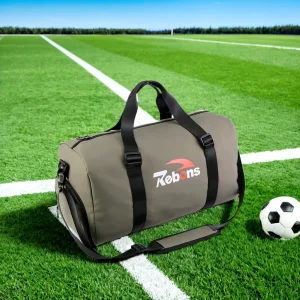



 Minyan Bag