Choosing the right travel bag is not simply a style decision. It affects comfort, security, packing discipline, and daily movement.
This guide, “How to choose leather bags for travel,” introduces ten practical tips for comparing leather luggage. We will examine leather quality, bag weight, stitching, hardware, storage, comfort, weather resistance, and repairability. Imagine lifting the bag into an overhead compartment, walking across uneven pavement, or searching for a passport at a crowded station. Small design details become important quickly.
Doug Dyment, founder of OneBag.com and a respected travel-packing expert, expresses the central principle clearly: “Pack light.” His advice matters because leather bags can become surprisingly heavy before clothing is added. A thick hide may feel luxurious, yet excessive weight can reduce comfort and increase airline restrictions. Full-grain leather offers durability, but tanning quality and construction still deserve careful inspection. No material guarantees perfection.
Look closely.
The following tips will help readers compare handles, shoulder straps, zippers, lining, compartments, and protective feet. We will also consider responsibly sourced leather and brands that provide repair services. A polished exterior can hide weak seams. That is an easy mistake to make. The best choice balances appearance with real travel demands, including rain, repeated handling, and long walks. A practical bag may develop scratches and patina over time. That is not necessarily failure; it can become evidence of useful journeys.
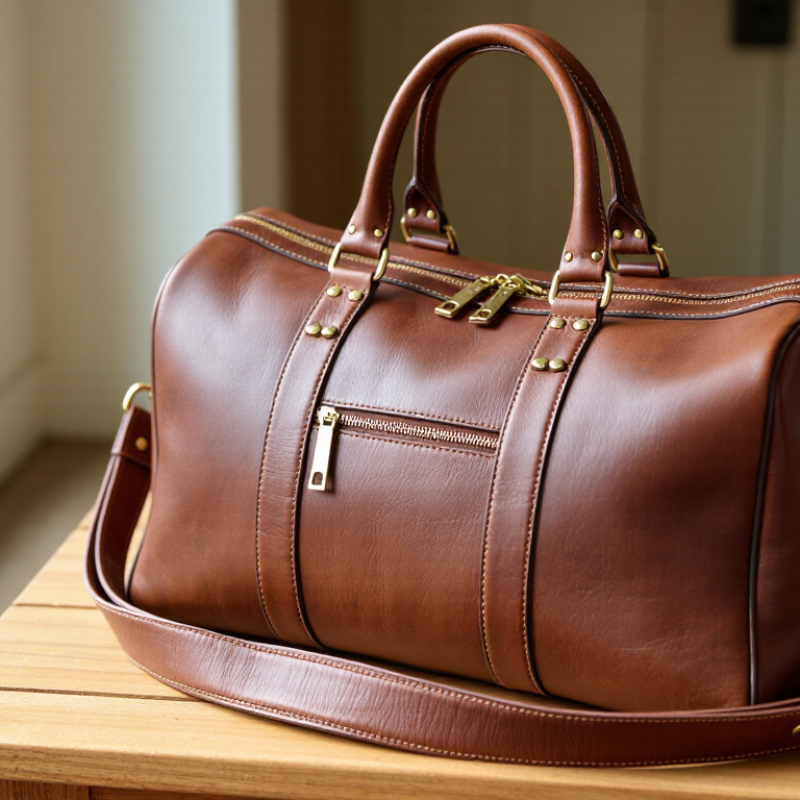
Choosing a leather travel bag begins with an honest question: what must it carry? For cabin journeys, use IATA’s 56 × 45 × 25 cm benchmark as a planning reference. It is not a universal promise. Airlines may apply smaller limits. Measure the packed bag, including wheels, handles, and outside pockets. Leather sides can bulge when filled. I learned this after an overpacked bag resisted the overhead compartment. That mistake was avoidable.
Tip 1: Pack a mock load before buying. Add shoes, a tablet, toiletries, and one light layer. Leave some space. A bag that fits only when perfectly arranged may become frustrating during real travel. Check whether the opening stays wide enough for easy packing. Small details matter.
Tip 2: Match the leather structure to your route. Durable leather can feel excellent, but it may add noticeable weight. Check the empty bag’s weight, stitching, zipper movement, and handle attachments. Lift it with one hand. If it already feels heavy, long terminal walks may become tiring. Inspect the lining and pocket layout. Documents and charging cables should be easy to reach. Also consider weather protection, since untreated leather can show water marks quickly. No choice is perfect. Practical capacity should come before appearance.
Assess leather like a materials inspector, not only a shopper. ISO 2418 identifies sampling areas such as the butt, shoulder, belly, grain side, and flesh side. These areas can show different strength, looseness, and surface character. Check the bag’s base and handle attachments first. A smooth grain side may look refined, yet hidden belly leather can stretch more easily. Leather Naturally estimates that about 1.4 billion hides and skins are processed annually. Much of this material is a by-product of food production, according to industry and agricultural reports. That scale makes traceability important, not optional.
Ask for the tannery, country of origin, and production batch. Compare the supplier’s records with Leather Working Group traceability criteria. Look for documented movement from raw hide to finished leather. LWG’s audit framework also examines environmental management, chemical control, and restricted substance procedures. These records do not prove every panel is perfect. They provide evidence. That distinction matters.
Bend a corner gently. Quality leather should flex without sharp cracking or heavy plastic stiffness. Smell the surface, then inspect the stitching under bright light. Uneven pores may indicate natural variation, not failure. I would still question unusually uniform grain. It may be heavily corrected. The 2024 Textile Exchange Materials Market Report treats leather separately from fiber production, reminding buyers not to compare materials using unrelated metrics. A lighter bag may travel better, but thin leather often needs stronger reinforcement. My judgment is not infallible. Physical testing remains wiser than attractive photos.
When choosing a leather travel bag, inspect its construction before admiring its color. I learned this after a handsome weekend bag failed at a crowded station. Its leather looked excellent, but the handle seam was weak.
Run your fingers along every stitch. Even spacing, tight tension, and neatly finished threads usually indicate careful workmanship. Loose loops can catch on seats or luggage carts. Check the handle attachments closely. Load-bearing seams should have reinforced stitching, such as a strong box pattern or crossed rows. Pull the handles gently. They should feel firm, not soft or shifting. Do not yank hard; a test should not damage a good bag. That sounds obvious, yet rushed inspections often miss hidden weakness.
Examine the hardware next. Zippers should move smoothly without scraping the leather. Buckles and rings should feel solid, with clean edges and secure connections. Lightweight hardware is not automatically poor, but unexplained rattling deserves attention. Look inside as well. A durable lining should sit flat and resist snagging, especially around pockets. I prefer a simple, repairable interior over many decorative compartments. Still, my judgment is imperfect. Some fine leather softens quickly, so stiffness alone cannot prove quality. Pack the bag with realistic weight and lift it several times. Watch for stretching, creaking, or lining pull near the seams. Those small movements reveal more than showroom shine.
This practical inspection chart assigns equal priority to stitching and load-bearing seams because they directly affect durability under travel loads. Hardware and lining are also essential for secure closure, abrasion resistance, and long-term usability.
A travel leather bag should feel manageable before it looks luxurious. I used to equate thick leather with quality; that judgment was incomplete. A dense bag can strain one shoulder during a long terminal walk. Weigh it empty, then add a laptop, charger, documents, and a water bottle. Aim for a balanced load, not merely a beautiful shell. Weight matters.
Strap design changes comfort dramatically. Choose a wide, adjustable strap with smooth edges and secure stitching. A padded shoulder section helps prevent pressure near the collarbone. Test the bag while walking, bending, and lifting it overhead. It should stay close to your body without restricting movement. A short handle is useful, but one carrying option is rarely enough. I sometimes overvalue appearance here.
Security deserves equal attention. SITA’s 2024 Baggage IT Insights report recorded 36.1 million mishandled bags in 2023, equal to 6.9 bags per 1,000 passengers. That figure supports using a bag with a dependable closure and lockable compartments. Keep passports, keys, and backup payment cards in separate internal sections. Select lock hardware that remains accessible during standard security screening. Avoid exposed zippers and loose straps that can catch on seats or conveyors. Small details matter.
Travel tests leather harshly. SITA’s 2024 Baggage IT Insights recorded 6.9 mishandled bags per 1,000 passengers in 2023. Choose dense stitching, protected corners, and tight hardware. Check the base carefully. A bag should survive a wet taxi floor, not only a showroom shelf. Ask whether the leather has a tested water-repellent finish, and request the test method. A vague “water-resistant” claim deserves skepticism.
Repairability often matters more than shine. Look for accessible seams, replaceable straps, standard buckles, and a lining that can be resewn. WRAP’s Valuing Our Clothes report estimates that extending product life by nine months can reduce carbon, water, and waste footprints by 20–30%. Leather bags are not clothing, so this figure is directional, not a promise. Still, it supports buying for longevity. I would also ask for a written warranty. Does it cover stitching, zippers, peeling, and hardware failure? Many policies exclude moisture. Read the exclusions.
Keep receipts and care instructions. Use a breathable dust bag, wipe salt quickly, and condition sparingly. Over-conditioning can soften structure. One practical mistake is trusting a warranty without checking repair locations and shipping costs. If repairs require a distant service center, the promise may be less useful. That detail is easy to miss. A durable travel bag should be maintainable, not merely attractive on departure day.
Inspect the grain side, flesh side, shoulder, belly, and base. Different areas can vary in strength and stretch. Bend a corner gently. Good leather should flex without sharp cracking. Look beyond attractive photos.
Ask for the tannery, country of origin, and production batch. Request records showing movement from raw hide to finished leather. These documents support traceability. They do not prove every panel is flawless.
Examine the pores under bright light. Natural variation is not automatically a defect. An unusually uniform surface deserves questions. It may have heavy correction. I could be wrong without physical testing.
Check the base, handles, and handle attachments carefully. These areas carry weight during lifting and walking. Look for reinforced box stitching or crossed rows. Pull gently. Never yank hard.
Stitches should have even spacing and tight tension. Threads should be neatly finished. Loose loops can catch on seats or luggage carts. Inspect hidden corners too. Small flaws become bigger during travel.
Move each zipper slowly. It should not scrape the leather. Buckles and rings should feel solid, with clean edges. The lining should lie flat and resist snagging. Too many decorative pockets may complicate repairs.
Weigh the empty bag before judging its comfort. Add a laptop, charger, documents, and a water bottle. Choose a wide, adjustable strap with smooth edges. A padded section can reduce shoulder pressure. Thick leather is not always better.
Choose dependable closures and separate internal compartments. Keep passports, keys, and backup payment cards apart. Lockable sections can add useful control. Check that the hardware remains accessible during normal security screening. Exposed zippers and loose straps can catch. Safety is partly about convenience.
Learning How to choose leather bags for travel begins with matching the bag to your itinerary, packing habits, and transportation requirements. For cabin use, compare its dimensions with the commonly accepted 56 × 45 × 25 cm benchmark, while leaving room for practical packing. Assess leather quality through consistent terminology associated with ISO 2418, and look for clear sourcing and traceability information aligned with responsible industry criteria. Examine the stitching, edge finishing, metal hardware, lining, and reinforced load-bearing seams, since these details strongly influence reliability.
Comfort and security are equally important. Choose a manageable weight, an adjustable strap, and handles that remain comfortable when fully loaded. Lockable compartments can help organize important personal items during normal travel. Finally, compare water resistance, ease of cleaning, repair options, and warranty coverage before making a decision. A well-chosen leather travel bag should balance appearance, capacity, durability, comfort, and long-term care rather than focusing on style alone.

Minyan Bag