Choosing a leather bag is less about chasing a fashionable silhouette and more about what you carry each day. A slim crossbody may suit a phone, wallet, keys, and transit card. A work tote needs room for a laptop, charger, and perhaps a lunch container. The right size also affects comfort: a bag that feels manageable in a shop can pull heavily on one shoulder after a long commute.
The market context is useful, but it cannot decide your personal fit. Grand View Research’s Leather Goods Market Size, Share & Trends Analysis Report estimated the global leather goods market at USD 468.5 billion in 2023 and projected growth through 2030. That figure describes the industry, not what size individual shoppers should buy. Fit matters. Not just looks. So this guide focuses on practical measurements, everyday carry, and how bag dimensions translate into usable space.
To work out how to choose the right size leather bag for your needs, start with the items you actually carry. Measure your laptop, check the bag’s internal dimensions, and consider how the opening and compartments affect access. A listed capacity can be misleading when a stiff structure, thick lining, or narrow base takes up room. There is no perfect formula, either; routines change, and a bag bought for occasional extras may become cumbersome. The sections ahead will help you compare sizes against real tasks, from quick errands to a full workday, without treating bigger as automatically better.
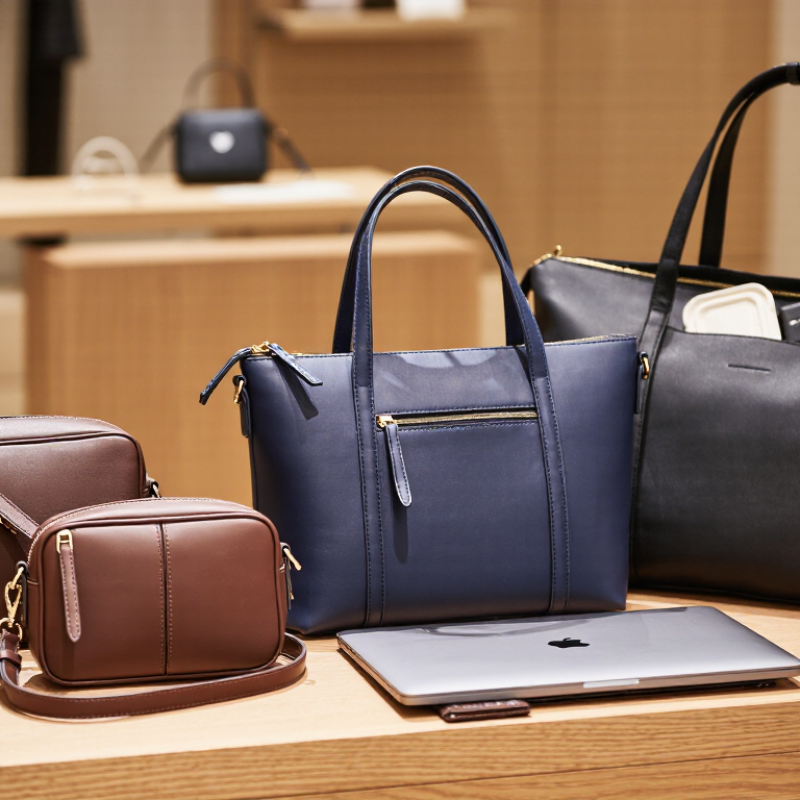
Key Factors That Determine the Right Leather Bag Size
Choose a leather bag by measuring your daily load, not by guessing from a product photo. Place your wallet, phone, keys, notebook, and water bottle on a table. Measure the tallest item and the space your essentials occupy. Then allow room for a small extra, such as sunglasses or a folded scarf. A bag that barely closes can feel frustrating. I learned this late.
Your routine matters as much as capacity. For commuting, check whether the bag holds documents without bending them, and whether its strap stays comfortable when loaded. For travel, measure the bag’s outer dimensions, including handles and pockets. IATA’s June 2024 industry forecast projected 4.96 billion air passengers worldwide that year; however, cabin-bag limits vary by airline. A roomy bag may still need to be checked. Also compare empty weight: thick leather and metal fittings can make a large bag tiring before you add anything.
Tips: Make a paper outline of the bag’s base and place your usual items inside it. Check the depth, opening, and strap drop—not just the listed width. Keep a little spare room, but question whether you’ll use it.
Assessing Your Daily Carrying Needs
Assess what you carry on an ordinary day, not an imagined busy one. Empty your current bag onto a table and group the contents: phone, wallet, keys, glasses, notebook, water bottle, and any work essentials. Notice which items you use daily and which merely take up space. A small leather bag may suit a phone and wallet, while a tablet or compact umbrella needs more depth and room. Measure your largest item before shopping; bag dimensions can be misleading when the opening is narrow. Check the strap drop, too, especially if you wear a thick coat.
Tips: Keep your everyday items together and test them in a bag with similar dimensions. Leave a little spare room. Overfilling can strain seams and make a bag awkward to carry.
Think about weight and access as well as capacity. A larger bag can encourage you to carry unnecessary items, and leather itself adds weight. If you walk or commute often, choose a size that sits comfortably against your side and lets you reach keys without digging. For occasional extra items, a flexible shape may work better than a rigid, oversized design. I’ve found that judging size from photos alone is easy to get wrong; compare measurements with a bag you already own. Then consider what you actually carry. Not what you might carry.
Understanding Bag Dimensions and Storage Capacity
Bag size is easier to judge in litres than by appearance. Measure the usable interior, not just the outside shell. A 30 × 20 × 10 cm compartment holds about 6 litres by simple volume calculation. Real capacity will be lower because seams, lining, and curved corners take space. That matters.
IATA passenger baggage guidance lists 56 × 45 × 25 cm as a common maximum cabin-bag size, including handles and wheels. Airline limits can differ, so treat this as a reference, not a guarantee. For a leather bag, external dimensions also hide practical details: a thick base may reduce space, while a wide opening makes a water bottle easier to reach. Check the stated measurements against items you actually carry.
Try a paper mock-up or measure your daily essentials on a table: wallet, phone, keys, glasses case, and a small notebook. A compact bag may fit them but leave no room for a folded scarf. I still find capacity estimates easy to overtrust; manufacturers may measure differently, and bag shape complicates comparisons. Leave some spare space if you carry the bag all day. A tight fit gets annoying fast.
Matching Bag Size to Your Body and Intended Use
The right leather bag should feel balanced against your body, not simply large enough to hold everything. If you have a petite frame, a compact crossbody or slim shoulder bag may look less overwhelming. Taller people often find medium or larger shapes easier to balance. Check where the bag rests: a strap that ends at your hip may feel comfortable, while one that cuts across your ribs can become annoying. Small details matter. Try the bag with a coat, too, since thicker clothing changes the fit.
Match the size to your routine. A small bag suits a phone, keys, wallet, and a few essentials. For a notebook, water bottle, or light sweater, choose a medium tote or roomy shoulder bag. If you carry a laptop, check its exact dimensions and the bag’s opening, not just its advertised capacity. I have misjudged this before: the bag looked spacious, but the zipper narrowed the opening. Carry your usual items for a few minutes. That feels more honest than judging an empty bag.
Tips: Keep heavier items close to your body. Leave a little spare room for daily extras. If the bag pulls on one shoulder, reconsider the size or strap. A beautiful fit can still be impractical.
How to Choose the Right Size Leather Bag for Your Needs? — Matching Bag Size to Your Body and Intended Use
| Bag size and style |
Typical dimensions (W × H × D) |
Approximate capacity |
Body fit and carrying advice |
Best suited to |
| Mini crossbody |
6–8 × 4–6 × 2–3 in
(15–20 × 10–15 × 5–8 cm) |
About 1–3 L |
Compact on most frames. Check strap length so the bag sits comfortably near the hip rather than too high or low. |
Phone, cards, keys, and other small essentials; short outings and occasions when traveling light. |
| Small everyday crossbody |
8–10 × 6–8 × 2–4 in
(20–25 × 15–20 × 5–10 cm) |
About 3–6 L |
A balanced option for many body types. Adjustable straps help position the bag securely around the waist or upper hip. |
Daily essentials, a small wallet, sunglasses, and a compact notebook. |
| Medium shoulder bag |
10–13 × 7–10 × 3–5 in
(25–33 × 18–25 × 8–13 cm) |
About 6–12 L |
Offers more capacity without usually extending far beyond the torso. Consider handle drop and where the bag rests under the arm. |
Everyday errands, commuting with a small tablet, and carrying a book or light layer. |
| Large tote |
13–17 × 11–15 × 4–7 in
(33–43 × 28–38 × 10–18 cm) |
About 15–30 L |
Can look proportionally large on a petite frame and may feel bulky when full. Wide straps and a manageable packed weight improve comfort. |
Work essentials, shopping, travel days, or carrying several larger items. |
| Work tote with laptop compartment |
14–17 × 11–14 × 4–6 in
(36–43 × 28–36 × 10–15 cm) |
About 15–25 L |
Choose the internal compartment based on the laptop’s actual width and height; the bag’s exterior dimensions alone do not guarantee a fit. |
Documents, chargers, and laptops commonly sized up to about 13–15 in diagonally, depending on compartment design. |
| Travel duffel |
18–22 × 10–13 × 8–10 in
(46–56 × 25–33 × 20–25 cm) |
About 25–45 L |
Large and best carried by hand or over the shoulder for shorter distances. Check the packed weight and your airline’s current cabin-bag limits. |
Weekend trips, gym gear, or a change of clothes and travel essentials. |
Size guide: Dimensions and capacity are approximate and vary with shape, lining, pockets, and construction. Measure the items you plan to carry, allow room for easy access, and try the bag on with its intended strap before choosing.
Checking Fit, Weight, and Practicality Before Buying
A bag should fit your daily load, not just look balanced on a shelf. Measure your usual items: a wallet, phone, water bottle, and notebook. Then check whether they fit without forcing the zipper or bulging the sides. Try the bag on with those items inside. Does it sit close to your body? Can you reach your keys without digging? Small details matter.
Check the bag’s empty weight, too. Thick leather and metal fittings can make a medium bag surprisingly heavy before you add anything. The American Chiropractic Association recommends keeping a backpack’s weight below 10% of the wearer’s body weight. That is not a handbag-specific limit, but it offers a useful caution against carrying too much. A shoulder strap can also feel uncomfortable when narrow or stiff. A little awkward. Notice where it presses after several minutes, not just in the mirror.
For travel, compare the bag with your airline’s current cabin rules. IATA’s Cabin OK guidance references dimensions of 56 × 45 × 25 cm, but individual airline limits can differ. Measure the bag at its fullest points, including handles and pockets. A soft leather bag may compress; a structured one usually will not. There’s a trade-off. I sometimes find the “roomy” option becomes the one I leave at home, which is worth considering before choosing extra capacity.
Conclusion
How to choose the right size leather bag for your needs starts with considering what you carry each day and how you plan to use the bag. Think about essentials such as a phone, wallet, keys, documents, or a tablet, then allow a little extra room for occasional items without choosing a bag that feels unnecessarily large. Compare the bag’s measurements and interior layout, since external dimensions do not always reflect usable storage capacity.
The right size should also suit your body and intended use, whether you need a compact option for errands or more space for commuting and travel. Before buying, check how the bag sits when worn, how its weight feels when loaded, and whether its compartments make everyday items easy to reach. A comfortable fit and practical design matter just as much as capacity, helping ensure the bag feels useful rather than bulky.

 Minyan Bag