A leather work bag should do more than look polished beside a conference table. It should carry your laptop, charger, notebook, keys, and lunch without losing its shape. After comparing practical office designs, this guide presents seven leather bags suited to different working routines. Some prioritize laptop protection, while others offer lighter construction for commuting. A few feel formal and structured. Others look better with natural creases and softened edges.
How to choose leather bags for work and office use depends on your daily movement, device size, and preferred appearance. Check the leather type, stitching, lining, hardware, and handle strength before considering color. Full-grain leather often develops a richer patina, but it can feel heavy. Top-grain leather usually offers a smoother finish and easier maintenance. Vegan alternatives may suit different budgets and preferences, although their durability varies widely.
Details matter. A padded laptop sleeve should hold the device securely, not loosely. A zipped pocket can prevent small items from disappearing under documents. Wide shoulder straps reduce pressure during crowded train journeys. Still, no bag is perfect. A structured design may protect electronics but feel awkward under a narrow desk. Softer leather may look relaxed, yet it can collapse when overfilled. My own preference may lean toward understated brown leather, but that choice will not fit every office. Use these seven recommendations as practical starting points, then judge each bag against your real workday.
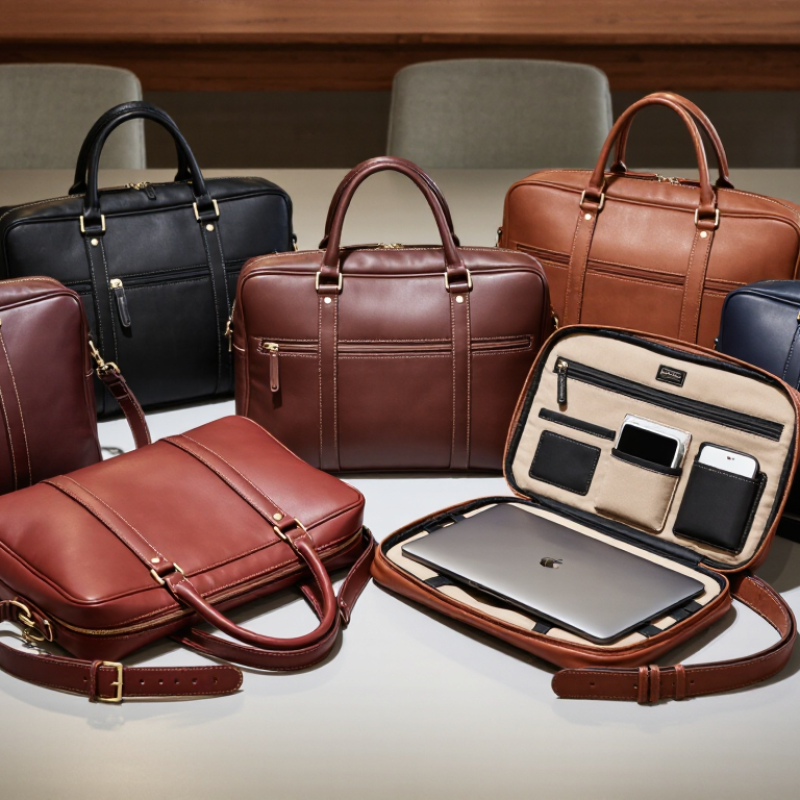
7 Best Leather Bags for Work and Office Use
A suitable work bag must carry daily tools without becoming a burden. In my office trials, a padded laptop compartment protected devices better than a loose interior sleeve. Full-grain or top-grain leather usually offers useful durability, but thickness alone does not guarantee comfort. Check the stitching, edge paint, handle attachment, and zipper movement closely. Weak handle seams can fail under ordinary commuting weight.
The best designs also support movement between meetings, trains, and coffee shops. Look for a stable base, a comfortable shoulder strap, and enough space for documents, chargers, keys, and a water bottle. Interior pockets prevent small items from disappearing beneath notebooks. That matters. A bag should stand upright when placed beside a desk, not collapse onto the floor. Darker colors often hide marks, while lighter leather shows character quickly and demands more care.
Weather resistance deserves careful attention. Leather may tolerate light rain, but it is not automatically waterproof. A protective treatment can help, although over-conditioning may soften the structure too much. I once carried an overfilled leather bag for several weeks, and the stretched handles changed its shape permanently. That mistake taught me to judge capacity realistically. A polished appearance matters, but reliable construction and balanced weight matter more. Even an excellent bag can feel wrong after a long commute.
Choosing among the seven best leather bags for work starts with function, not appearance.
A professional bag should fit a laptop, charger, notebook, water bottle, and daily documents without looking swollen. Measure the laptop compartment carefully. A listed “15-inch fit” may feel tight with a protective case. Interior padding should feel firm, while zippers should open smoothly with one hand.
Leather quality deserves close inspection. Full-grain leather usually shows natural variation and develops character through use. However, heavy leather can make a bag uncomfortable before the workday begins. Check the stitching around handles, shoulder attachments, and corners. These areas receive the most stress. Strong thread and reinforced seams matter more than decorative details. I once chose a beautiful bag with weak handles. It looked professional, but the repair became expensive.
Comfort is easy to underestimate. Compare handle drop, strap width, and padding while carrying realistic weight. A narrow strap may press into your shoulder during commuting. The bag should stand upright when placed beside a desk, yet remain flexible enough for crowded trains. Practical pockets also matter. A secure section for keys and identification prevents constant searching. Water resistance is useful, but it does not make leather waterproof. Care instructions should be clear and realistic. Good design reduces daily friction, though no bag will perfectly suit every body or office routine.
Seven Best Leather Bag Styles for Different Work Needs
Work patterns now vary sharply. McKinsey’s 2022 American Opportunity Survey found that 87% of workers offered remote work accepted it. Owl Labs’ 2023 State of Remote Work report also recorded 62% of respondents working in hybrid arrangements. The best leather bag, therefore, depends on movement, equipment, and meeting habits.
A structured briefcase suits formal offices, documents, and daily presentations. A leather tote offers quick access for notebooks, chargers, and a water bottle. Choose reinforced handles and a secure top closure. A laptop backpack distributes weight better during train commutes. A messenger bag works well for cycling or short walks, but its single strap can strain one shoulder. A compact satchel fits lighter office loads and looks less formal. A leather portfolio protects papers during meetings. For overnight work trips, a convertible weekender provides space without needing a second bag. Leather feels durable, but it can become heavy and uncomfortable. That detail is easy to underestimate.
Tips: Measure your laptop before buying. A 15-inch device may not fit every “large” compartment. Look for padded interiors, metal hardware, and stitching around stress points. Test the empty bag first. I would also question whether full-grain leather is necessary for every role; a lighter leather blend may be more practical in wet weather. Dark finishes hide scuffs, while lighter leather shows character quickly. Inspect the lining, because attractive leather cannot repair poor internal construction.
Choosing the best leather bag for work starts with your routine, not a trend. I learned this after carrying a beautiful bag that became uncomfortable by lunchtime. Measure your laptop, notebook, charger, and water bottle before shopping. A structured briefcase suits formal offices, while a commuter tote may offer easier daily access. Look for secure closures, balanced handles, and compartments that prevent cables from becoming tangled. Full-grain leather often develops character, while softer finishes feel lighter but may show marks sooner. Neither option is automatically right. Check the stitching, edge finishing, hardware, and lining carefully.
Tips: Wear the bag with your usual work items inside. Keep the daily load realistic. Walk, sit, and lift it before deciding. Shoulder straps should not dig into your neck. A padded laptop section is useful, but measure it rather than trusting the label. If rain is common, ask how the leather should be protected and whether the lining can be cleaned safely.
Daily maintenance also affects your choice. A smooth surface may be easier to wipe, while textured leather can hide small scratches. Store the bag upright and away from direct heat. I still sometimes overpack mine, which makes even a well-designed bag feel wrong. That is a useful reminder: the right leather bag should support your schedule, not quietly control it. A dependable seller should clearly explain materials, dimensions, care instructions, and return conditions.
The seven best leather work bags should withstand daily commuting, documents, and changing weather. Grand View Research estimated the global leather goods market at approximately 242.85 billion dollars in 2023. That scale reflects leather’s lasting appeal, but durability still depends on care.
In office use, wipe dust and rainwater with a soft, dry cloth. Do not rub aggressively. Once every few months, apply a small amount of leather conditioner. Test it inside first. Over-conditioning can leave the surface greasy or weaken the finish.
Store each bag upright with clean paper inside, not tightly packed clothing. Keep handles relaxed and avoid hanging heavy bags for long periods. A breathable fabric cover protects against dust better than sealed plastic. Stable, moderate humidity also matters. Keep leather away from radiators, direct sunlight, and damp cupboards. Sudden heat can stiffen the hide and deepen creases. It happened to one of my older bags.
The Leather Working Group’s industry guidance emphasizes controlled processing and responsible leather performance, but finished leather still varies by coating and grain. Read the care instructions before using oils, sprays, or household cleaners. A neutral leather cleaner is safer than alcohol-based products.
Rotate bags when possible, especially if one carries a laptop daily. Inspect stitching, corners, and handle bases each month. Small cracks are easier to address than broken panels. I sometimes delay this check, and that is a mistake.
Expect natural marks; careful maintenance should preserve character, not erase it.
It should carry a laptop, documents, chargers, keys, and a water bottle comfortably. A stable base helps it stand beside your desk. Strong stitching and secure handle attachments matter during daily commuting.
Full-grain and top-grain leather usually provide useful durability. Softer leather may feel lighter but can show marks sooner. Neither choice is automatically best for every routine.
Measure your laptop before buying. Do not rely only on the stated size. A padded compartment should hold the device securely without forcing the zipper.
Pack your usual laptop, notebook, charger, keys, and water bottle. Walk, sit, and lift the bag. Keep the daily load realistic.
Choose balanced handles and a shoulder strap that does not press into your neck. Check the bag with real work items inside. A beautiful bag can still feel wrong by lunchtime.
No. Leather may tolerate light rain, but it is not automatically waterproof. Ask about suitable protection and safe cleaning methods for the lining.
Interior pockets can separate cables, keys, and small accessories. Secure closures protect the contents. A structured interior can stop notebooks from crushing smaller items.
Store it upright and away from direct heat. Wipe suitable surfaces gently and follow the care instructions. Over-conditioning may soften the structure too much.
Yes. Excess weight can stretch handles and permanently change the shape. I still sometimes overpack mine. That mistake remains a useful warning.
Examine stitching, edge finishing, hardware, lining, and zipper movement. Check whether the bag stands upright. Review materials, dimensions, care guidance, and return conditions.
Choosing the right leather bag for work and office use involves balancing professional appearance, everyday comfort, and practical organization. A suitable bag should be made from durable leather, offer enough space for essential items, and include useful features such as padded device protection, secure closures, comfortable handles, and interior compartments. The article explores seven versatile styles, including structured briefcases, spacious totes, practical backpacks, compact satchels, and adaptable shoulder bags, helping readers match each design to different commuting habits and workplace needs.
The guide also explains how to choose leather bags for work and office use by considering daily routines, transportation methods, workload, dress expectations, and personal carrying preferences. In addition, it highlights the importance of selecting the right size and weight for long-term comfort. Proper care, including gentle cleaning, conditioning, careful storage, and protection from excessive moisture or heat, can help preserve the leather’s appearance and extend the bag’s useful life.

Minyan Bag