Vegan leather bags are entering 2026 with sharper designs, lighter structures, and more complicated material choices. They may use polyurethane, recycled polyester, bio-based coatings, or blended composites. These materials can look beautifully smooth, yet they do not age like animal leather. A warm car seat, a leaking water bottle, or repeated rubbing against denim can leave permanent marks.
The 2024 Textile Exchange Materials Market Report recorded global fiber production at approximately 132 million tonnes in 2023. Its forecast suggests continued growth toward 160 million tonnes by 2030. That scale makes material care important, not optional. Grand View Research also identifies vegan leather as a growing alternative-material market, driven by fashion innovation and consumer demand. However, “vegan” does not automatically mean durable, recyclable, or low-impact. That deserves more honest discussion.
So, How to care for vegan leather bags? Louise Southerden, a leather-care educator and author, offers a practical reminder: “Clean gently, condition sparingly, and keep leather away from heat.” Her advice suits coated vegan materials, although it needs one correction. Many vegan bags should not receive traditional leather conditioners. A soft, barely damp cloth is safer for daily dust. Test any cleaner inside first. Never soak the bag.
This guide examines the best vegan leather bags for 2026 and explains how their surfaces respond to sunlight, moisture, friction, and storage. Some recommendations may feel overly cautious. They are. A few minutes of care can prevent peeling, cracking, and unnecessary replacement.
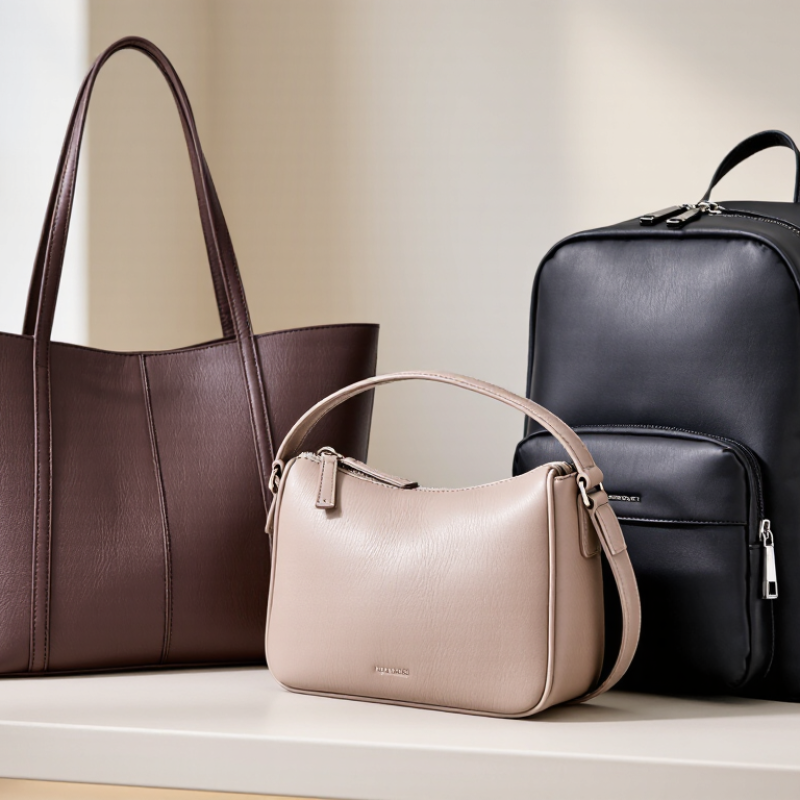
2026 Best Vegan Leather Bags: How to Care for Them
Vegan leather is not one material. Most bags use polyurethane, polyvinyl chloride, or bio-based coatings. PU feels softer and usually bends more naturally. However, heat and moisture can make its surface crack or peel. PVC resists water better, but it often feels stiffer and needs careful disposal considerations. Bio-based coatings may use cactus, apple, mushroom, or other plant materials. “Bio-based” does not automatically mean biodegradable. Some products still contain plastic binders.
Market data shows why clear labeling matters. Grand View Research estimated the global vegan leather market at about USD 42 billion in 2023. It also projected strong growth through 2030. Textile Exchange’s 2024 Materials Market Report recorded polyester at roughly 57% of worldwide fiber production in 2023, reminding us that many alternatives still rely on synthetic chemistry. The label can be confusing.
I clean PU and PVC bags with a soft, slightly damp cloth. I avoid alcohol, abrasive wipes, and soaking. A dry cotton cloth removes surface dust from bio-based coatings. Never store any bag beside a heater or in direct summer sunlight. Keep it stuffed with plain paper, not newspaper, which can transfer ink. I once over-cleaned a coated bag and weakened its finish. That mistake still matters. Care instructions vary, so check the product label before applying any conditioner.
A practical 2026 material review should begin with evidence, not appearance. Higg Materials Sustainability Index data can compare impacts linked to production, including emissions, water use, and chemistry. However, Higg MSI results describe materials, not complete bags. Manufacturing, transport, hardware, and product lifespan also matter. A low-impact material may perform poorly if it cracks after one season.
Textile Exchange data adds useful context about preferred fibers and emerging bio-based alternatives. Polyurethane-based vegan leather often feels flexible and light, while PVC-based options can raise different environmental concerns. Bio-based coatings may reduce fossil content, but “bio-based” does not automatically mean biodegradable. Data quality can vary, and some comparisons remain imperfect. That limitation deserves honesty. Buyers should check the specific material percentage, backing fabric, coating, and durability testing before choosing a bag.
Tips: Keep vegan leather away from direct heat and strong sunlight. Wipe marks with a soft, damp cloth. Do not soak the surface. Avoid alcohol-based cleaners, abrasive sponges, and household oils. Store the bag upright with plain tissue inside, never compressed under heavy items. Check care instructions before applying any conditioner, because many products can make synthetic coatings sticky. I once underestimated humidity; a closed cupboard caused unpleasant surface changes. Ventilation matters.
Before buying a vegan leather bag in 2026, read the care label first. Codes such as W, S, WS, or X are not decorative. They indicate which moisture or solvent treatments are allowed. ISO 6330:2021 describes controlled domestic washing and drying procedures for textile testing. It is not universal permission to wash every bag. Check the label against the appropriate ISO 6330 procedure, then follow the manufacturer’s instructions. The coated outer shell may require different care from the textile lining.
Material construction matters. Many vegan leathers use polyurethane or PVC coatings over woven or nonwoven backings. Heat, soaking, and aggressive rubbing can cause peeling, clouding, or edge cracking. Test a hidden corner with a barely damp white cloth. Blot, do not scrub. Dry slowly. Never assume “machine washable” applies to hardware, adhesives, or shaped panels. That distinction matters.
Textile Exchange’s 2024 Materials Market Report places global fiber production at 124 million tonnes in 2023, with projections reaching 160 million tonnes by 2030. Care is small, but useful, when it extends product life. WRAP’s Valuing Our Clothes report estimates that adding nine months to a garment’s active life can reduce carbon, water, and waste footprints by up to 20–30%. Bags are not identical, so treat this as directional evidence, not a guarantee. Care labels can be too broad. Recheck them after spills, repairs, or lining damage, and record what actually works.
Vegan leather looks simple, but its surface is usually a thin polymer coating over fabric. That coating can crack when heat, sweat, and bending repeatedly attack it. Textile Exchange’s Materials Market Report 2024 recorded 124 million tonnes of global fiber production in 2023. Material blends vary widely, so one cleaning rule cannot fit every bag. Read the care label.
Wipe dust away with a dry, soft microfiber cloth. For marks, dilute a small amount of mild, pH-neutral soap in cool water. Dampen the cloth, then wring it almost dry. Never soak the bag. Water can enter seams and weaken the backing. Test an unseen corner first. Small tests prevent large regrets.
After cleaning, pat the surface with a clean towel. Let the bag dry naturally in a ventilated room. Avoid radiators, hairdryers, direct sun, and closed plastic storage. Heat accelerates coating fatigue, while trapped moisture may encourage peeling. The Global Synthetic Leather Market report by Grand View Research identifies polyurethane as a major material segment, and polyurethane coatings can become brittle after repeated heat and flexing. Use a protective spray only when the care label approves it. Choose a product made for synthetic leather, not wax, oil, or untreated leather. Store the bag upright, lightly stuffed with acid-free paper, and avoid sharp folds. Cracks rarely disappear completely. Prevention is less glamorous, but more honest.
| Care Area | Recommended Practice | Frequency or Timing | What to Avoid | Reason |
|---|---|---|---|---|
| Routine dust removal | Wipe the surface gently with a clean, dry microfiber cloth. Use light strokes rather than rubbing aggressively. | Weekly or whenever visible dust appears | Rough towels, abrasive brushes, and vigorous scrubbing | Reduces surface abrasion that can dull or weaken the protective coating. |
| Spot cleaning | Mix a small amount of mild, pH-neutral soap with lukewarm water. Dampen a soft cloth, wring it out well, and gently blot the mark. | As soon as a spill occurs | Soaking the bag or applying soap directly to the material | Limited moisture helps clean the surface without encouraging swelling, staining, or coating damage. |
| Final wipe | Use a second cloth lightly dampened with clean water to remove soap residue, then pat the surface dry. | After every wet-cleaning session | Leaving detergent residue on the coating | Residue can attract dirt and may leave the finish sticky, cloudy, or uneven. |
| Drying | Let the bag air-dry in a cool, shaded, well-ventilated place. Keep its shape with clean, dry tissue paper if needed. | Until completely dry before storage or use | Radiators, hair dryers, tumble dryers, and direct sunlight | High heat and intense sunlight can accelerate drying, fading, stiffness, and cracking of the coating. |
| Protective product testing | If using a protector, choose one specifically labeled as suitable for synthetic or polyurethane-coated materials. Test it first on a hidden area. | Before the first full application | Leather oils, waxes, silicone-heavy products, alcohol, acetone, and bleach | Products designed for natural leather may darken, soften, stain, or break down a synthetic coating. |
| Water exposure | Wipe away rain or splashes promptly with a dry absorbent cloth, then allow the bag to air-dry naturally. | Immediately after exposure | Wringing, twisting, or storing the bag while damp | Moisture trapped in folds or seams may contribute to odor, discoloration, or shape distortion. |
| Storage | Store the clean, dry bag in a breathable fabric dust bag or pillowcase. Keep it upright with light internal support. | Whenever the bag is not in use | Airtight plastic bags, heavy stacking, and damp closets | Breathable storage limits moisture buildup and helps prevent permanent creases and deformation. |
| Contact with clothing | Be cautious with dark or newly dyed clothing, especially in humid or rainy conditions. Wipe the bag after use if color transfer is suspected. | During regular use | Prolonged rubbing against denim or unwashed dark fabrics | Dye transfer can be difficult or impossible to remove from light-colored coated surfaces. |
| Metal hardware | Polish hardware separately with a dry, soft cloth and keep metal cleaners away from the vegan leather surface. | When fingerprints or oxidation appear | Applying acidic or abrasive metal polish directly to the bag | Metal-cleaning chemicals may discolor or dissolve the surface coating. |
| Condition assessment | Inspect handles, corners, seams, and frequently folded areas for peeling, tackiness, or fine cracks. | Monthly and before long-term storage | Peeling the coating or using glue without testing compatibility | Early detection allows gentler handling and may prevent damage from spreading through friction or moisture. |
Note: Vegan leather may be made from different synthetic or plant-based materials. Always check the care instructions supplied with the specific bag before applying any cleaning or protective product.
Vegan leather bags need more than a soft cloth and careful storage. Their durability usually depends on the surface coating, textile backing, stitching, and edge finishing. ASTM D751 test data can help assess coated fabrics through breaking strength, tear strength, and coating adhesion. These results are useful, but they are not a complete durability guarantee. Test samples may differ from the finished bag.
Look for clear values in newton units and the exact test conditions. Strong breaking results suggest better resistance to pulling, while higher tear resistance may reduce damage from sharp corners. Coating adhesion matters when checking peeling or flaking risks. I would also inspect seams, handles, and zipper bases by hand. A good laboratory result cannot excuse weak stitching. That mistake is easy to make.
Store the bag upright in a cool, dry place. Use clean paper to support its shape, but avoid tightly packing the interior. Keep it away from heaters, sunlight, and damp walls. For small scratches, wipe gently with a barely damp cloth and test any cleaner inside first. Do not use abrasive sponges or unverified oils. If the coating lifts, stop rubbing it. A professional repairer may stabilize the area, although the color match may be imperfect. I have found that early repairs look less obvious than late ones. Still, ASTM D751 data should be read beside real handling experience, not treated as the only answer.
Care priority for vegan leather bags assessed through durability properties commonly reported under ASTM D751, including coated-fabric strength, elongation, tear resistance, coating adhesion, and water resistance.
Higher scores indicate properties that deserve closer attention during storage, cleaning, and repair. ASTM D751 does not define one universal pass/fail threshold for every vegan leather product, so laboratory results should be compared with the manufacturer’s specification for the specific material.
Read the care label before purchasing. Codes like W, S, WS, and X describe permitted cleaning methods. Do not assume every bag can be washed.
Only follow the specific care instructions. Machine washing may damage coatings, adhesives, hardware, or shaped panels. “Machine washable” can be misleading.
Apply it to a hidden corner first. Use a barely damp white cloth. Blot gently, and never scrub. Small tests prevent larger mistakes.
Many bags use polyurethane or PVC coatings over textile backings. Heat and prolonged moisture may cause peeling, clouding, or cracked edges. Dry the bag slowly.
Keep it upright in a cool, dry place. Use clean paper to support its shape. Avoid heaters, direct sunlight, damp walls, and tight packing.
Check the coating, backing, seams, handles, edge finishing, and zipper bases. Test data can show breaking strength, tear resistance, and coating adhesion. Laboratory results are useful, but incomplete.
Wipe gently with a barely damp cloth. Test any cleaner inside the bag first. Avoid abrasive sponges and unverified oils. Stop rubbing if the coating lifts.
Seek help when the coating peels, edges crack, or stitching weakens. Early repairs may look less noticeable. Color matching may still be imperfect. That happens.
Longer use can reduce waste, water, and carbon impacts. One clothing study suggests nine extra months may reduce impacts by 20–30 percent. Bags differ, so this is only directional evidence.
Choosing the best vegan leather bag in 2026 requires understanding how its materials are made and how they perform over time. PU, PVC, and bio-based coatings each offer different balances of flexibility, durability, environmental impact, and maintenance needs. Comparing material information through Higg MSI and Textile Exchange data can help shoppers evaluate resource use and fiber or coating composition more thoughtfully. Labels should also be checked carefully, including care symbols and manufacturer instructions, while ISO 6330 washing guidance can provide useful context for compatible cleaning methods.
How to care for vegan leather bags depends on protecting the surface coating. Wipe away dirt with a soft, lightly damp cloth, avoid harsh solvents and excessive soaking, and let the bag dry naturally away from direct heat. A suitable protective product may help prevent drying or surface cracking when approved for the material. Store bags upright in a cool, dry place, use gentle repairs for small defects, and assess long-term durability by considering abrasion, coating adhesion, and flexibility indicators related to ASTM D751 test data.

Minyan Bag